LADA diabetes: symptoms, diagnosis, treatment and LADA vs MODY
LADA is autoimmune diabetes that starts slowly in adults, so it's often first mistaken for type 2. It's confirmed with a blood test for autoantibodies, most often GAD, and your care team sets the treatment according to how much insulin you still make. Many people with LADA need insulin sooner or later.
· 3 min read
LADA, or latent autoimmune diabetes in adults, is diabetes that the immune system causes, like type 1, but that starts slowly in adulthood, so it often looks like type 2 at first. Many people with LADA spend months or years on tablets for type 2 before anyone tests for antibodies. This guide explains what LADA is, how it's diagnosed and how it compares with type 1, type 2 and MODY.
What LADA is
In LADA the immune system gradually attacks the cells in the pancreas that make insulin. The damage is slower than in classic type 1, so for a while the body still makes enough insulin to manage without injections. You may also hear it called "type 1.5". The American Diabetes Association groups all autoimmune diabetes under type 1, while the World Health Organization lists a slowly evolving immune-mediated form among its hybrid types. Estimates put it at 2 to 12% of people with adult-onset diabetes, varying with population and the tests used.
Symptoms
LADA has the same symptoms as any high glucose: thirst, passing a lot of urine, tiredness, blurred vision and weight loss you can't explain. They can build up slowly. Things that make doctors think of LADA include tablets that stop working sooner than expected, a body weight that doesn't fit the typical picture of type 2, and a personal or family history of autoimmune conditions.
How it's diagnosed
Only a blood test can tell. An international expert panel describes three key criteria:
- Diabetes that starts in adulthood, after about age 30.
- Diabetes-related autoantibodies in the blood. GAD antibodies are the most common.
- No need for insulin for at least 6 months after diagnosis.
Doctors also often measure C-peptide, which shows how much insulin your body still makes. If your diagnosis doesn't feel right, it's reasonable to ask your doctor whether antibody tests make sense for you.
LADA, type 1, type 2 and MODY compared
| LADA | Type 1 | Type 2 | MODY | |
|---|---|---|---|---|
| Cause | Autoimmune, slow | Autoimmune, faster | Insulin resistance and falling insulin production | One inherited gene |
| Usual start | Adults | Any age, often young | Adults, increasingly younger | Often before 25 to 35 |
| Antibodies | Yes | Usually | No | No |
| Insulin | Often needed sooner or later | From the start | Sometimes | Depends on the gene |
| Confirmed by | Antibodies | Clinical picture, antibodies | Clinical picture | Genetic test |
Treatment
There's no single plan, and your care team sets it. The expert consensus bases decisions largely on how much insulin you still make, and warns that LADA can progress, so your needs may change over time. Many people with LADA end up on insulin.
How a glucose sensor fits in
Because LADA changes slowly, a continuous glucose monitor can make those changes easier to see: higher readings after meals, or more time above range than last month. Whether a sensor is covered depends on your country and treatment, so ask your care team.
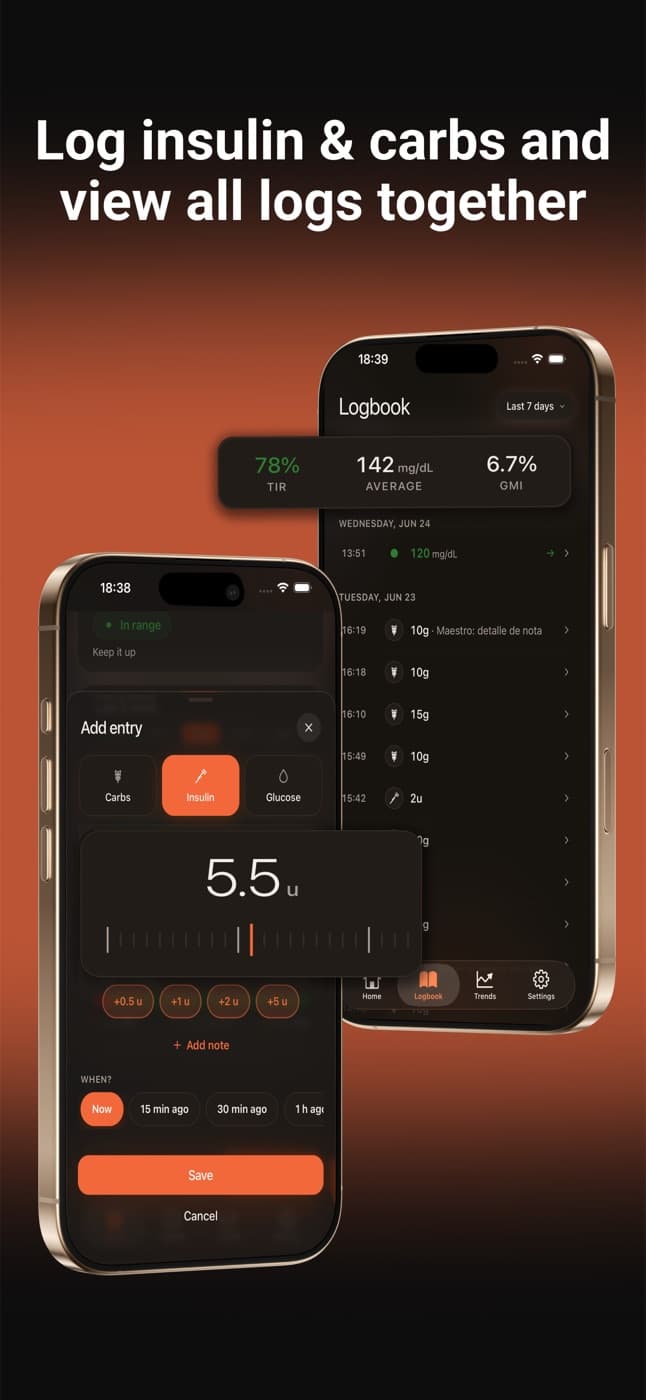
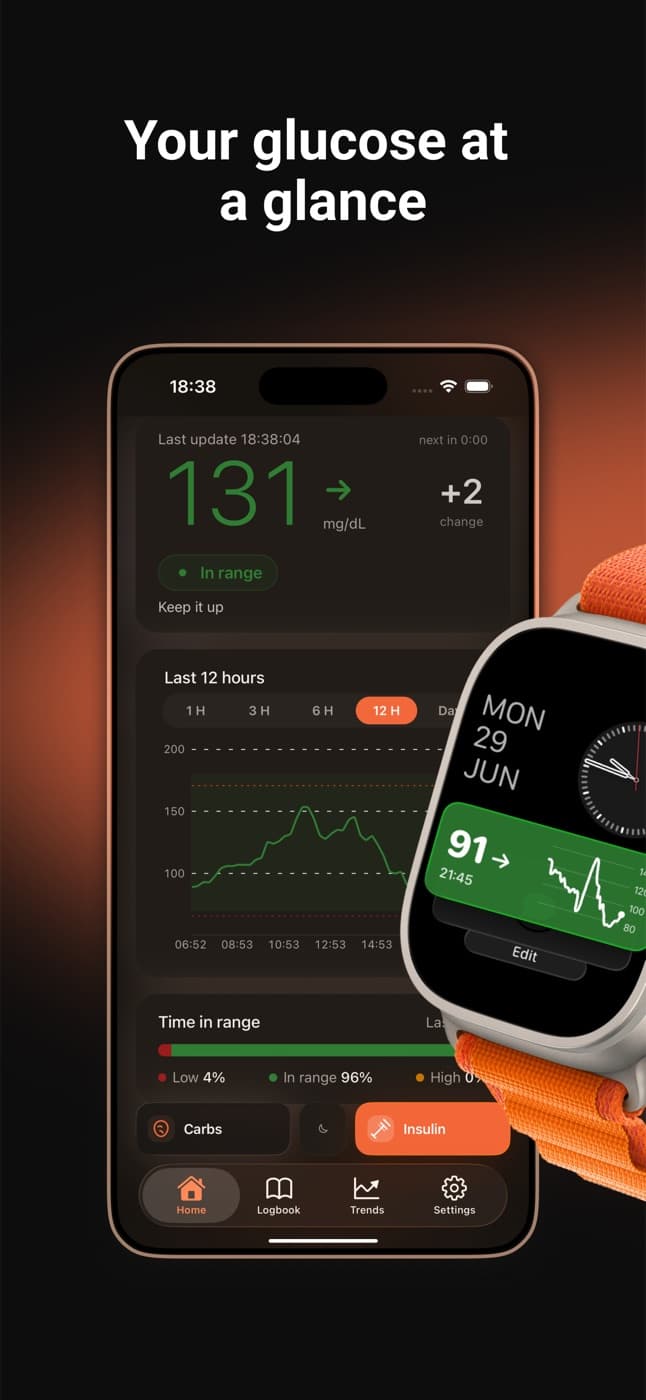
Dulce doesn't ask what type of diabetes you have. If you use a supported sensor, it shows your glucose on the Lock Screen, in widgets and on Apple Watch, and time in range shows the trend over weeks. You can compare results with the A1C calculator. It's free to start, and the blood sugar levels guide explains the numbers.
Sources
- Buzzetti R. et al. Management of Latent Autoimmune Diabetes in Adults: A Consensus Statement From an International Expert Panel. Diabetes 2020;69(10):2037-2047. doi.org/10.2337/dbi20-0017
- American Diabetes Association Professional Practice Committee. Diagnosis and Classification of Diabetes: Standards of Care in Diabetes-2026. Diabetes Care 2026;49(Suppl 1):S27-S49. doi.org/10.2337/dc26-S002
- World Health Organization. Classification of diabetes mellitus. 2019. who.int
Quick questions
Is LADA type 1 or type 2?
It's autoimmune like type 1, but it progresses more slowly and looks like type 2 at first. The American Diabetes Association groups it under type 1, and it's sometimes called type 1.5.
Does LADA always need insulin?
Many people need it sooner or later, but the timing varies. Your care team decides based on how much insulin your body still makes.
What's the difference between LADA and MODY?
LADA is autoimmune and appears in adults with antibodies. MODY is caused by a single inherited gene, has no antibodies and is confirmed with a genetic test.
Does Dulce work with LADA?
Yes, as long as you use a supported sensor. Dulce shows what your sensor measures and doesn't ask what type of diabetes you have. Read more: CGM for type 2 diabetes: with or without insulin
This article is for information and does not replace advice from your care team. Dulce is not a medical device and does not replace your sensor's alarms.
Dulce is an independent app, not affiliated with Abbott. FreeStyle Libre, LibreLink and LibreLinkUp are trademarks of Abbott.
Founder of Dulce, lives with type 1 diabetes
Giorgi lives with type 1 diabetes and founded Dulce. He built the app because he was tired of unlocking his phone, opening an app and waiting just to see one number. He writes about what he uses every day with his sensor, iPhone and Apple Watch.