Nocturnal hypoglycemia: why night lows are easy to miss
A night low is glucose below 70 mg/dL while you sleep, and it is easy to miss because the body releases less adrenaline in response to a low during sleep, so many people don't wake up. A sharp dip while you lie on the sensor can also be a compression low rather than a real one. Set up alerts that can actually wake you (silent mode off, Dulce allowed in your Sleep Focus), and confirm any low with your sensor and your care team.
· 6 min read
A low during the day is unpleasant, but you usually notice it: you feel shaky, you check, you treat it. A low at 3 a.m. is different. You may sleep right through it and only find out the next morning from a strange line on the graph, a damp pillow or a headache. This guide explains why night lows are harder to catch, how to tell a real one from a sensor artifact, and how to set up your iPhone so an alert can actually wake you.
What counts as a low
The American Diabetes Association uses three levels, and they are the same at night as during the day:
| Level | Glucose | What it means |
|---|---|---|
| Level 1 | Under 70 mg/dL (3.9 mmol/L) and 54 mg/dL or more | Alert value: time to act |
| Level 2 | Under 54 mg/dL (3.0 mmol/L) | Clinically significant low |
| Level 3 | Any number | A severe event: you need someone else's help to recover |
For people using a sensor, the international consensus on time in range sets a general goal of less than 4% of the time below 70 mg/dL and less than 1% below 54 mg/dL. That's about an hour a day and 15 minutes a day respectively, spread over day and night. Your care team may set stricter or looser targets for you. More on these numbers in time in range vs. A1C.
Why nights are different
During sleep, the body's alarm system for lows is weaker. In a study published in Diabetes, adults with type 1 diabetes released less adrenaline in response to a low while asleep than while awake, something not seen in people without diabetes, and they stayed asleep through it more often. A later study in PLoS Medicine made the point even more clearly: glucose was lowered during sleep in 16 people with type 1 diabetes and 16 without. Only one person with diabetes woke up, compared with ten of the people without it.
In other words: you can't count on your body to wake you. That's why it's worth checking, before you go to sleep, that an alarm can actually reach you.
Signs you may have had one
If you don't wear a sensor overnight, or the alarm didn't go off, some people notice clues the next morning: sheets or pyjamas wet with sweat, vivid dreams or nightmares, a headache on waking, or feeling unusually tired or foggy. None of these prove a low on their own. The sensor graph is the best evidence: look at the night in the Libre app or in Dulce.
Real low or compression low?
Sensors measure glucose in the fluid under the skin. If you lie on your sensor, the pressure can push that fluid away and the reading drops even though your blood glucose hasn't. A study in the Journal of Diabetes Science and Technology recorded people's sleeping position on video and found that sudden drops in sensor readings lined up with lying on the sensor.
A compression low usually looks like this:
- a sharp, almost vertical drop rather than a gradual slide,
- often while you sleep on the side or arm where the sensor is,
- and a quick bounce back to where you were once you turn over.
If it doesn't look like that, or you're unsure, treat it as real and check with a fingerstick meter if you have one. Never ignore a low reading just because it might be a compression artifact. And always confirm with your sensor or meter before acting.
Setting up Dulce for the night
Everything below is under Settings → Alerts in Dulce. The full tour is in the glucose alerts guide; these are the settings that matter at night.
Keep Critical low alerts on
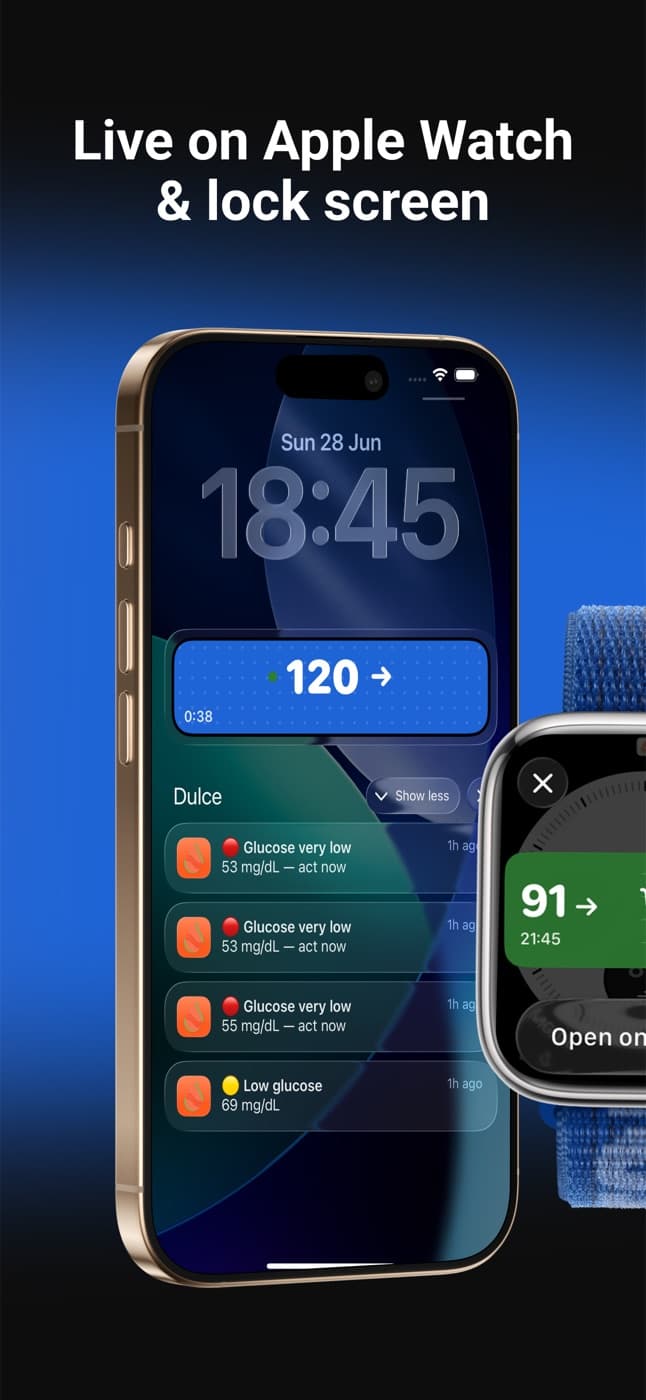
It fires when glucose is 55 mg/dL or lower, always with the Alarm sound, and repeats every 5 minutes while you stay that low. Quiet hours and snooze don't stop it. It's on by default, and Dulce asks you to confirm before turning it off.
Make sure your iPhone can make a sound
Dulce's alerts arrive as regular iPhone notifications, so they follow your phone's sound settings: with the iPhone on silent they won't ring. At night, keep silent mode off. If you use the Sleep Focus, open the iPhone Settings app → Focus → Sleep and add Dulce to the apps allowed to notify you.
Decide what quiet hours should mute
Quiet hours mute every alert except Critical low during the window you choose. That includes the Low glucose alert (70 mg/dL by default, adjustable from 50 to 80) and Predictive low. So with quiet hours on, the only alert you'll get overnight is for a reading of 55 or below. If you'd rather hear about a low earlier, leave quiet hours off. They are off by default.
Consider Predictive low
It warns you when your glucose has been falling steadily over several readings and, at that pace, would cross your low threshold within about 15 minutes. It only suggests checking your sensor, never a treatment. It's off by default.
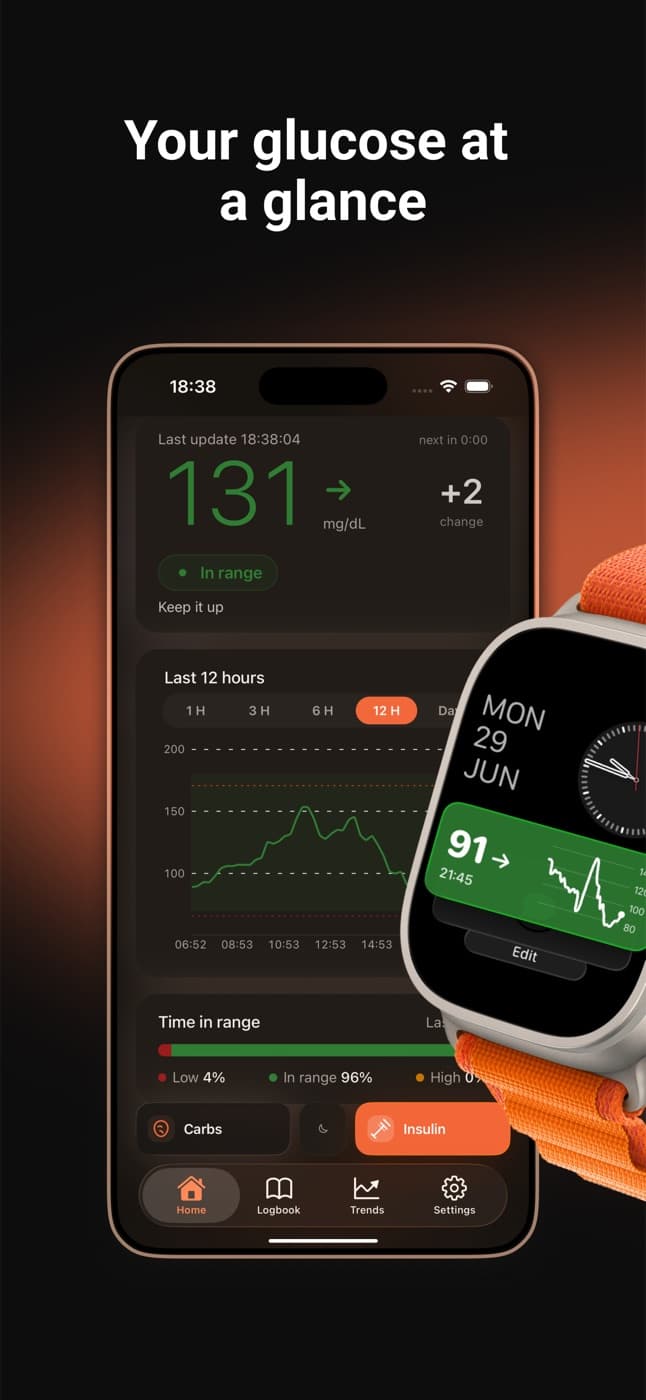
Alerts don't depend on the app being open: Dulce's server checks your LibreLinkUp readings every minute with Dulce Pro and every 5 minutes with the free version. If you sleep with an Apple Watch, iOS sends the alert to your wrist when the iPhone is locked. And keep the Libre app's own alarms on as well: two independent alarms are better than one.
When someone else watches over the night
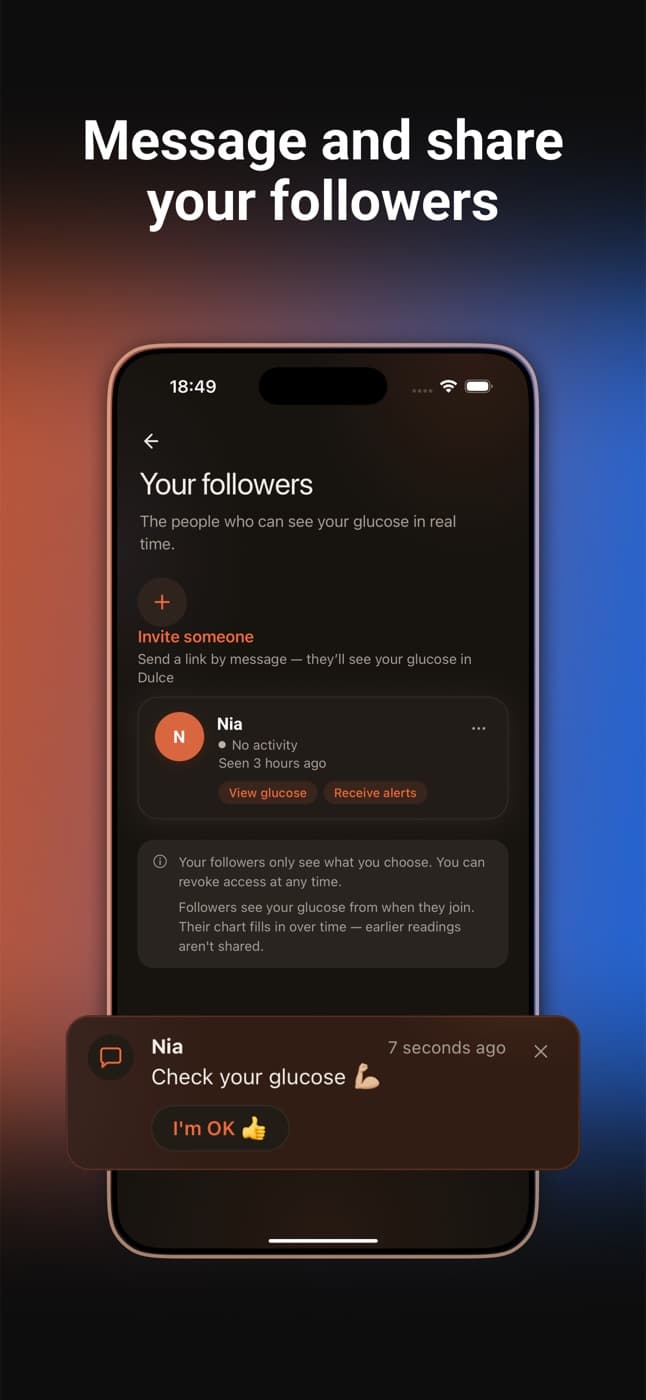
Parents of children with type 1 diabetes, partners and adult children of older parents often want to know about a night low too. Followers in Dulce get their own alerts, with their own quiet hours, and very low readings always reach them. The Live Activity on their Lock Screen shows the number without unlocking the phone, which helps on a 3 a.m. check. See how to see your child's glucose on your iPhone.
Look for patterns, not single nights
One low night happens. The same low at the same hour, night after night, is a pattern worth taking to your next appointment. In Dulce, the Trends tab splits your time in range by Time of day, including the night. Look at 14 days rather than 7, and check time below range before anything else. The Trends guide explains each chart.
Exercise is one known factor: an international consensus on exercise in type 1 diabetes notes that it can raise the risk of a low the following night, especially when the activity is late in the day. What to change is a decision for you and your care team, not for an app.
Sources
- American Diabetes Association Professional Practice Committee. Glycemic Goals, Hypoglycemia, and Hyperglycemic Crises: Standards of Care in Diabetes-2026. Diabetes Care 2026;49(Suppl 1):S132-S149. doi.org/10.2337/dc26-S006
- Battelino T. et al. Clinical Targets for Continuous Glucose Monitoring Data Interpretation: Recommendations From the International Consensus on Time in Range. Diabetes Care 2019;42:1593-1603. doi.org/10.2337/dci19-0028
- Banarer S., Cryer P. E. Sleep-related hypoglycemia-associated autonomic failure in type 1 diabetes: reduced awakening from sleep during hypoglycemia. Diabetes 2003;52:1195-1203. doi.org/10.2337/diabetes.52.5.1195
- Schultes B. et al. Defective awakening response to nocturnal hypoglycemia in patients with type 1 diabetes mellitus. PLoS Medicine 2007;4(2):e69. doi.org/10.1371/journal.pmed.0040069
- Mensh B. D. et al. Susceptibility of interstitial continuous glucose monitor performance to sleeping position. J Diabetes Sci Technol 2013;7(4):863-870. doi.org/10.1177/193229681300700408
- Riddell M. C. et al. Exercise management in type 1 diabetes: a consensus statement. Lancet Diabetes Endocrinol 2017;5(5):377-390. doi.org/10.1016/S2213-8587(17)30014-1
Quick questions
What counts as nocturnal hypoglycemia?
A glucose level below 70 mg/dL while you sleep. The ADA calls a drop below 54 mg/dL level 2, and a severe episode where you need someone else's help level 3, day or night.
Why don't I wake up during a low?
Because during sleep the body releases less adrenaline in response to a low. In one study, only 1 of 16 people with type 1 diabetes woke up during a low induced in their sleep, compared with 10 of 16 without diabetes.
Can my sensor show a false low at night?
Yes. Sleeping on the sensor can cause a sharp drop that bounces back once you turn over. If in doubt, treat it as real and confirm with a fingerstick meter.
Do Dulce alerts ring with my iPhone on silent?
No. They arrive as regular notifications and follow your iPhone's sound settings. At night, turn silent mode off and, if you use the Sleep Focus, allow notifications from Dulce. Read more: Glucose alerts on iPhone: lows, highs and how to hear them at night
This article is for information and does not replace advice from your care team. Dulce is not a medical device and does not replace your sensor's alarms.
Dulce is an independent app, not affiliated with Abbott. FreeStyle Libre, LibreLink and LibreLinkUp are trademarks of Abbott.
Founder of Dulce, lives with type 1 diabetes
Giorgi lives with type 1 diabetes and founded Dulce. He built the app because he was tired of unlocking his phone, opening an app and waiting just to see one number. He writes about what he uses every day with his sensor, iPhone and Apple Watch.