Newly diagnosed with type 1 diabetes: a guide to the first weeks
In the first weeks after a type 1 diagnosis, the priorities are knowing how to treat a low, what to do when you're ill and who to call, all with your care team. Type 1 can start at any age, and the American Diabetes Association supports using a sensor from the start. Dulce starts free and shows your glucose without opening an app while the people around you follow along.
· 3 min read
A type 1 diagnosis arrives with a lot at once: injections, carbs, alarms and new words, often while you're still in shock. It can happen at any age, so this guide is for adults who've just been told and for parents of a newly diagnosed child. It doesn't replace what your care team teaches you. It's a map of the first weeks, and of where a glucose sensor and an app like Dulce fit in.
The first days
Your care team leads this part. Before you leave them, try to be sure you know:
- How to recognise and treat a low, and who around you should know how too.
- What to do when you're ill, and when to test for ketones.
- Who to call, day and night.
- Your own target range. Don't copy someone else's.
Words you'll hear
| Word | What it means |
|---|---|
| Hypo | Glucose below 70 mg/dL (3.9 mmol/L) |
| Hyper | Glucose above your target range |
| CGM | Continuous glucose monitor: a sensor on your skin |
| Trend arrow | Where your glucose is heading |
| Time in range | Share of the day inside your target |
| HbA1c | A lab average of about 3 months |
| Honeymoon | A period after starting insulin when your body still makes some of its own |
The blood sugar levels guide and the time in range guide go deeper when you're ready.
Your first sensor
The American Diabetes Association recommends offering a CGM at or soon after diagnosis to children and adolescents who can use it safely, and supports CGM from the onset of diabetes for adults on insulin. Ask your team which sensors are available to you.
In the first days a sensor can feel like too much information. A few things help:
- One number doesn't mean much. Look at the trend and the day, not one spike.
- Set alerts with your team. Too many at the start only wear you out.
- Sensors lag behind finger pricks, especially when glucose moves fast. If a reading doesn't match how you feel, check as your team showed you.
Your first sensor, on your Lock Screen
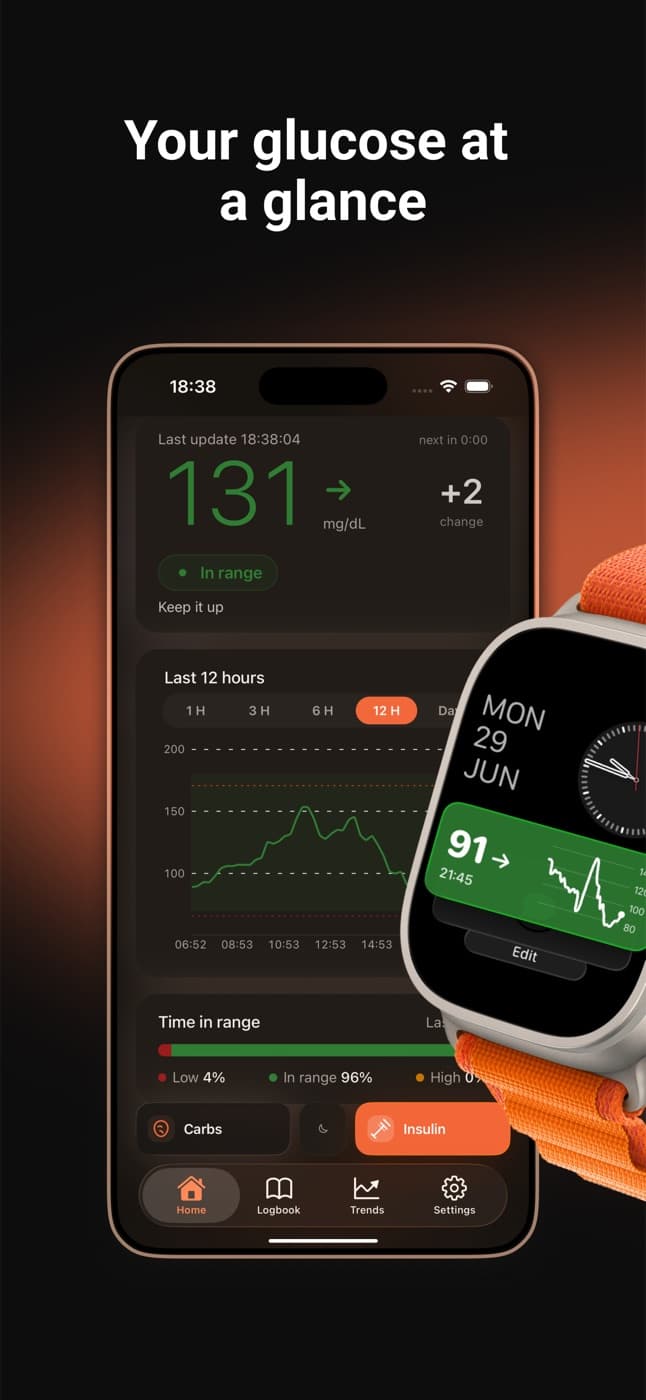
Your sensor's own app works, but checking it means unlocking your phone and opening it, many times a day while everything is new. Dulce brings the reading to you. It starts free with live glucose, Home Screen and Lock Screen widgets, low and high alerts, a Logbook and Trends. You can connect it in minutes with the setup guide.
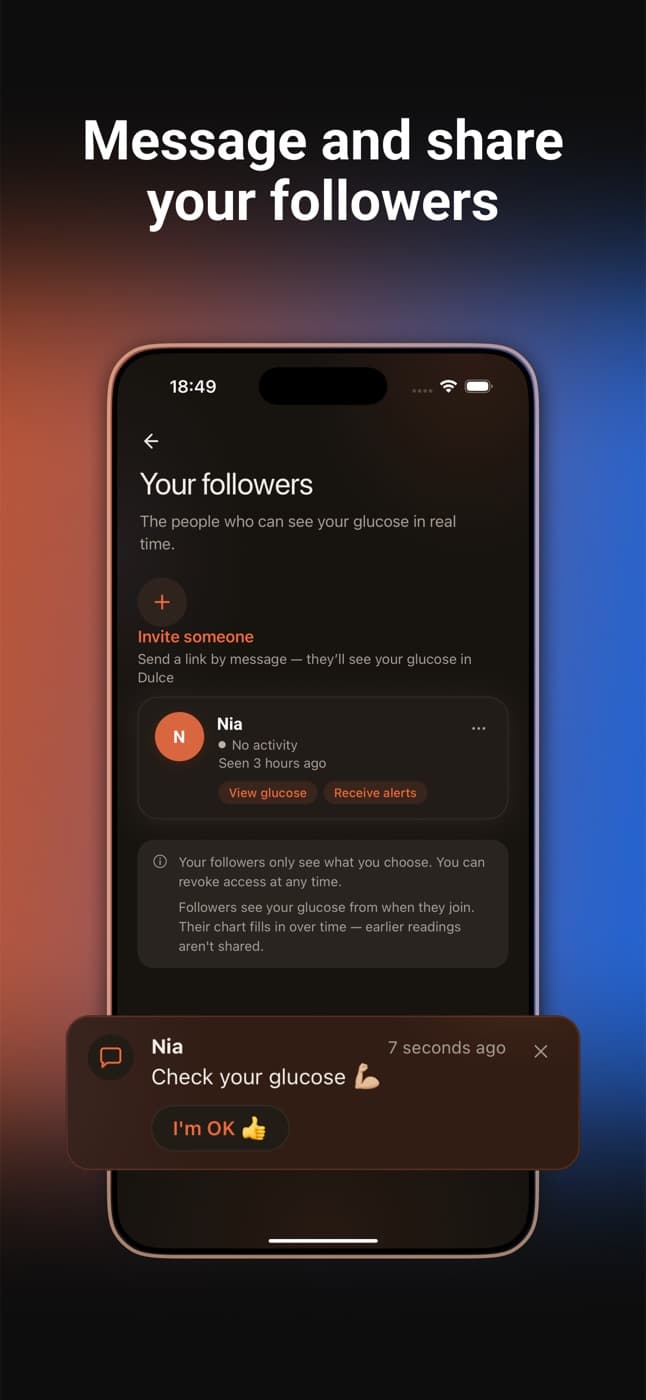
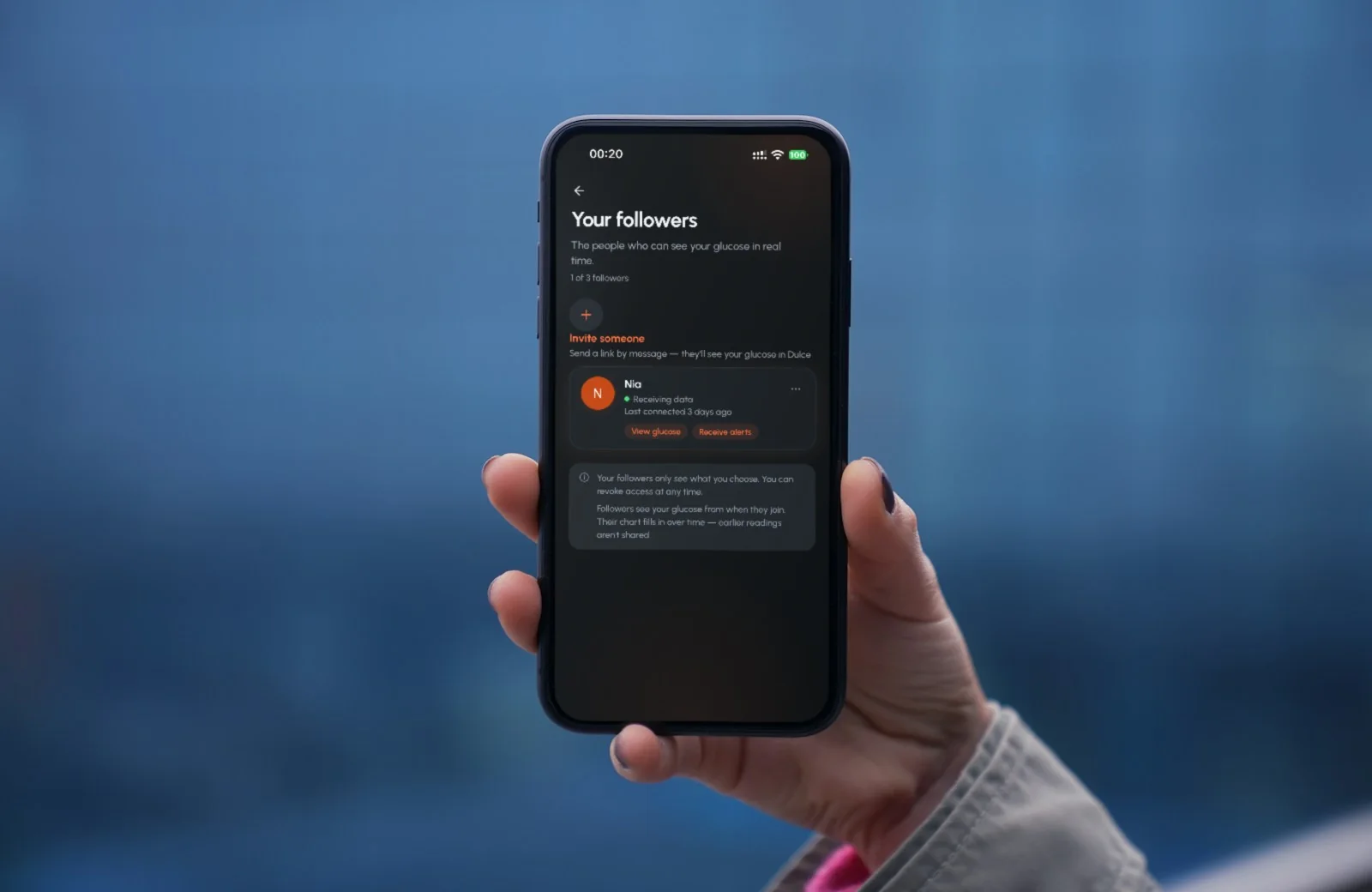
With Dulce Pro, a 14-day free trial, the number stays on your Lock Screen and Apple Watch, and as many people as you like can follow from their own iPhones. That's often the biggest relief for a partner or parents in the first weeks, as the family sharing guide explains. If it's your child who was diagnosed, read how to see your child's glucose and the school guide.
Give yourself time
Nobody learns this in a week. Numbers will go up and down even when you do everything right, and that isn't failure. Ask for a diabetes educator, and for psychological support if you need it: it's part of care, not an extra.
Sources
- American Diabetes Association Professional Practice Committee. Diabetes Technology: Standards of Care in Diabetes-2026. Diabetes Care 2026;49(Suppl 1):S150-S165. doi.org/10.2337/dc26-S007
- American Diabetes Association Professional Practice Committee. Children and Adolescents: Standards of Care in Diabetes-2026. Diabetes Care 2026;49(Suppl 1):S297-S320. doi.org/10.2337/dc26-S014
- American Diabetes Association Professional Practice Committee. Diagnosis and Classification of Diabetes: Standards of Care in Diabetes-2026. Diabetes Care 2026;49(Suppl 1):S27-S49. doi.org/10.2337/dc26-S002
- Battelino T. et al. Clinical Targets for Continuous Glucose Monitoring Data Interpretation: Recommendations From the International Consensus on Time in Range. Diabetes Care 2019;42:1593-1603. doi.org/10.2337/dci19-0028
Quick questions
Can you get type 1 diabetes as an adult?
Yes. Type 1 diabetes can start at any age. If you're diagnosed as an adult, your care team will confirm the type with the right tests.
When should I start using a sensor?
Ask your care team from the start. The American Diabetes Association supports a sensor from the onset of diabetes for children, teens and adults on insulin who can use it safely.
Does Dulce tell me how much insulin to take?
No. Dulce shows readings and keeps your Logbook, but it doesn't calculate or suggest doses. That's for you and your care team.
Can my family see my glucose?
Yes. With Dulce Pro you can invite as many people as you like, who see your glucose on their own iPhone and pay nothing. Read more: How to share your Libre glucose with your family
This article is for information and does not replace advice from your care team. Dulce is not a medical device and does not replace your sensor's alarms.
Dulce is an independent app, not affiliated with Abbott. FreeStyle Libre, LibreLink and LibreLinkUp are trademarks of Abbott.
Founder of Dulce, lives with type 1 diabetes
Giorgi lives with type 1 diabetes and founded Dulce. He built the app because he was tired of unlocking his phone, opening an app and waiting just to see one number. He writes about what he uses every day with his sensor, iPhone and Apple Watch.